EXPERIMENTAL DUPLEX CANCELLATIONS OF SCOTLAND


Please note the following: a) all images are not necessarily to scale and b) all dates and codes shown * have been obtained from the relevant reference books. Those without the asterisk have been verified by myself.

It should be noted that whilst I might state that a mark is Common this is relative to the other Experimental marks; the fact is that they are ALL relatively scarce


wp816fa158.png

ABERDEEN TYPE 1a


Characteristics: Four short bars each side of ‘1’ The bottom part of the third ‘E’ appears damaged on the Proof and this is seen on all 1a & most 1b strikes (but see comments under 1b below)

Known Codes: A*, C, D*, E, F*, G* & H*

Proofed: 1st January 1856

EKD: 7th January 1856*         LKD: 3rd March 1856

Scarcity: Scarce in view of short life before the ‘E’ damage (see Type 1b below). I have seen only three examples


IMAGE


wp531c78fb.png

ABERDEEN TYPE 1b


Characteristics: As Type 1a but the top part of the first ‘E’ was also damaged in March 1856. Rather surprisingly I have seen examples dated August 1856, July & December 1857 which appear to have the third ‘E’ complete (see Images)

Known Codes: A*, D, E, F, G & H*

EKD: 4th April 1856              LKD: 3rd March 1859

Scarcity: Relatively Common although I have seen few copies during 1856


IMAGE


wpf20e7651.png

ABERDEEN TYPE 1c


Characteristics: As Type 1a but the inner arc is missing. Supposedly this was Type 1b which had both ‘E’s corrected in March 1860  but for some reason the arc was eliminated. It has not been recorded in use.

Known Codes: ??

Proofed: 10th March 1860

EKD: ??                                  LKD: ??

Scarcity: Not recorded in use


wp97dc232d.png

ABERDEEN TYPE 2


Characteristics: This was proofed at the same time as Type 1a but the letters are slightly larger, particularly the letters ‘D’ and ‘E’. The clincher is the fact that the left vertical stroke of ‘N’ points to bar 4 rather than bar 3 as is the case in Type 1a/b/c. The EKD currently points to this mark being held in reserve and perhaps used after Type 1b had been withdrawn?

Known Codes: C, D, F & H

Proofed: 1st January 1856

EKD: 25th March 1859         LKD: 22nd December 1860*

Scarcity: Relatively scarce


IMAGE


wp5351ab41.png

ABERDEEN TYPE 3


Characteristics: Six short bars each side of ‘1’

Known Codes: A, C, D, E, F & H

Proofed: 28th March 1860

EKD: 9th January 1861   LKD: 24th December 1862

Scarcity: Relatively Common and presumably was held in reserve until Type 2 had been phased out.


IMAGE


wp50ebaf0e.png

ABERDEEN TYPE 4


Characteristics: As Type 3 but only five short lines each side of ‘1’. In view of the LKD of Type 3 it is likely that this is a recut of that type despite the Proof book indicating it is a ‘new’ type.

Known Codes: D, E, F, G* & H

Proofed: 25th December 1862

EKD: 17th January 1863       LKD: 1st April 1865

Scarcity: Relatively Common


IMAGE


wp8c2c1c31.png

DUMFRIES


Characteristics: Four short bars each side of ‘108’. Top part of the ‘F’ is missing/damaged during the life of this mark although this damage is NOT shown on the proof impression. It would be great to see an undamaged ‘F’.

Known Codes: A,B,C and none. Seen in BLUE on 9th September 1857 (see Image)

Proofed: 1st January 1856

EKD: 3rd January 1856         LKD: 12th October 1857*

Scarcity: Scarce but in blue Very Rare


IMAGE


wp30502ebd.png

DUNDEE


.During its 2 ½ year life this mark suffered quite a bit of damage and I have therefore decided to detail this damage (and therefore the various Types) on a separate page.


Click HERE to view the information


wpefee7b49.png

EDINBURGH TYPE 1


Characteristics: Four short bars each side of ‘131’. Three variations (within the date circle) were proofed between August and December 1856

Known Codes: Left A,B, H Right M, X, *

EKD: 26th January 1856         LKD: 31st March 1856

Scarcity: Extremely Rare with probably only a handful of dated copies known - value say £2,000? I have only seen one example on cover, two on piece and one on stamp only


IMAGE

wp7175c49d.png

EDINBURGH TYPE 2


Characteristics: As per the image

Known Codes: Top A, E, Bottom W, Z

Proofed: 20th May 1856

EKD: 30th May 1856           LKD: 2nd June 1856

Scarcity: Extremely Rare; probably less than a dozen dated copies known - I have only seen two covers and four on piece


IMAGE


wpc8b6d905.png

EDINBURGH TYPE 3a


Characteristics: As Type 2 but with the dater portion breaking into the bars below ‘131’. There is a similar design proofed on the same day (although the year says 1853!) with the circle slightly lower and cutting the bottom line only. The example shown here is described as ‘screw’ whereas the other is ‘hinged’.

Known Codes: ??

Proofed: 10th June 1856

EKD: ???                        LKD: ??

Scarcity: I have not seen an example


wpb68cd877.png

EDINBURGH TYPE 3b


Characteristics: Very similar to Type 3a but year in two figures only.

Known Codes: W & H to the left of the year, E at the top  and E, H, N, X and nothing at bottom

Proofed: 6th March 1857

EKD: 12th March 1857         LKD: 18th March 1857

Scarcity: Extremely Rare; I have seen only five dated examples of which three have been on piece in blue. I have only seen one on cover. Suggest value £1,000+


IMAGE


wp64e7bbfc.png

EDINBURGH TYPE 3c


Characteristics: As Type 3b but no code (Is this a separate Type albeit it is shown in Proof Books?)

Known Codes: None

Proofed: 23rd October 1857

EKD: ??                           LKD: ??

Scarcity: Extremely Rare; I have not seen any copies


wp35c8b66d.png

GLASGOW TYPE 1


Characteristics: Four short bars each side of ‘159’.

Known Codes: E & H (the latter being on the left or right)

Proofed: No impression in the proof books

EKD: 22nd October 1855    LKD: 4th February 1856*

Scarcity: Rare; probably no more than a few dozen dated copies exist.


IMAGE


wpd4947b26.png

GLASGOW (‘MADELEINE SMITH’ TYPE)


Since the putting together of this web page, important information has come to light relative to the possible different types of this mark.


Click HERE to view the information


wp4a715010.png

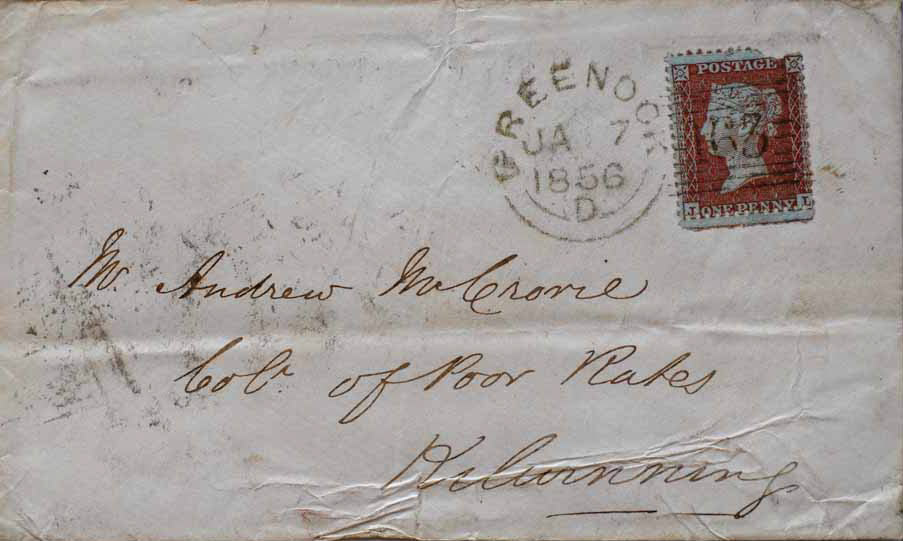
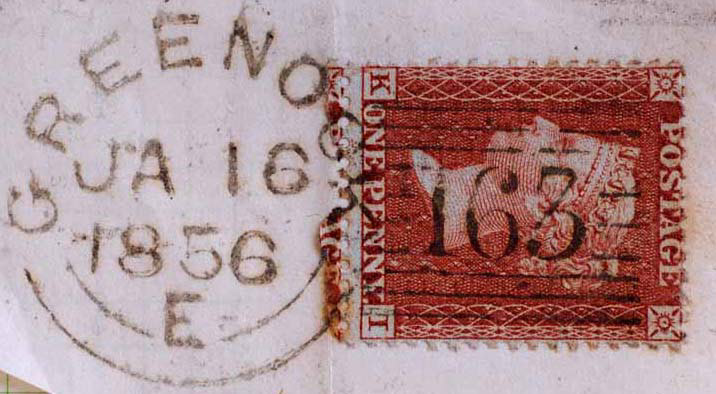
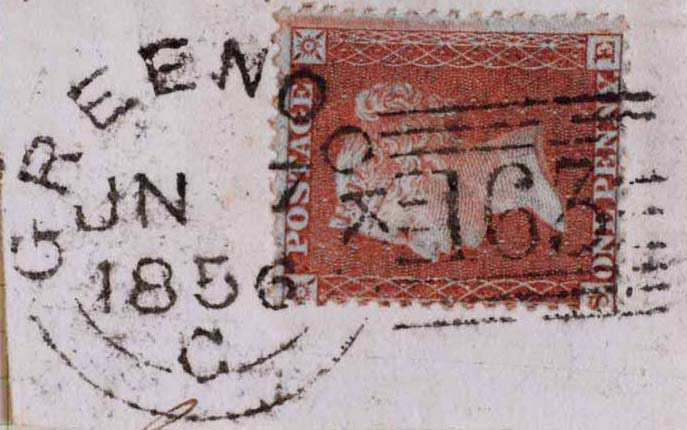
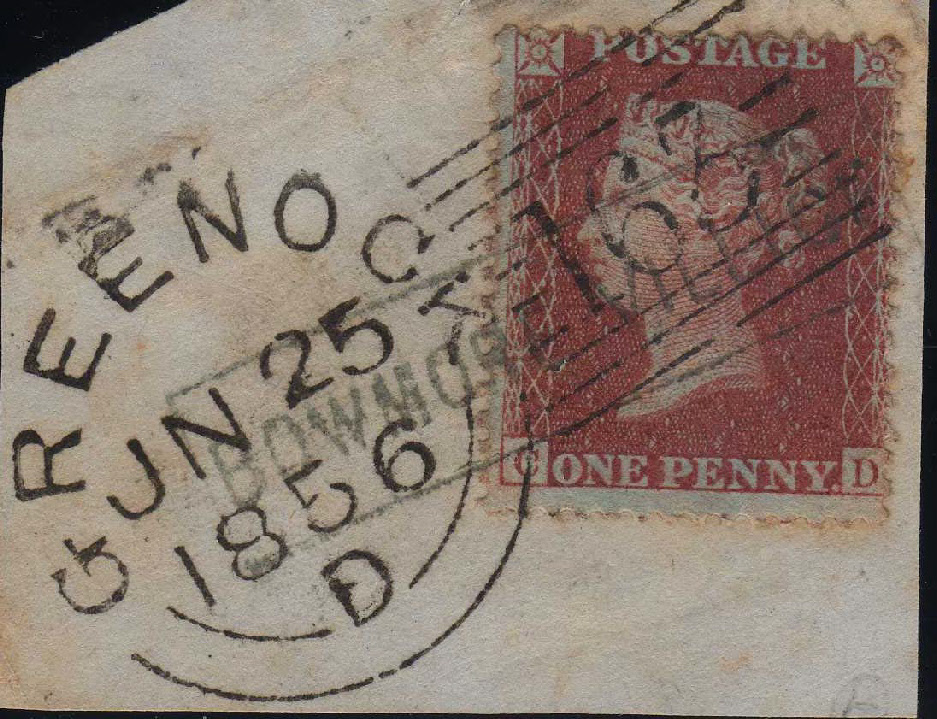
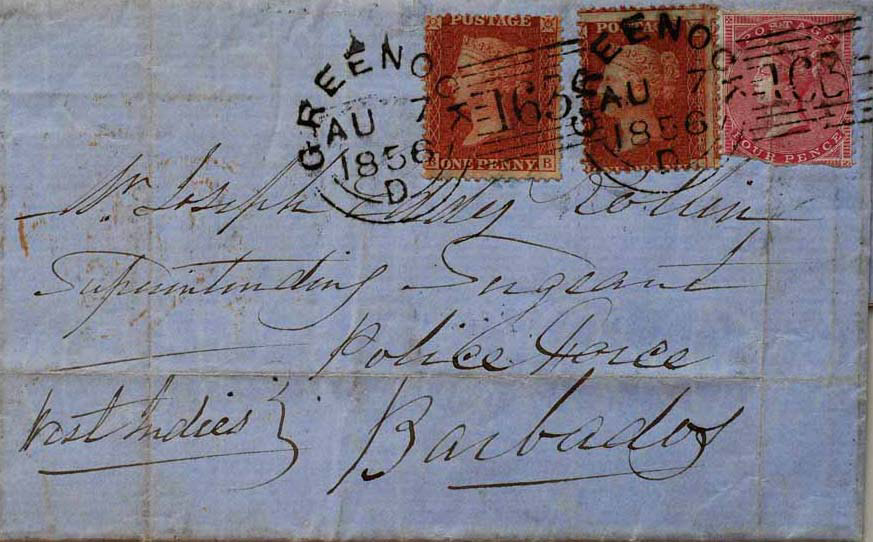
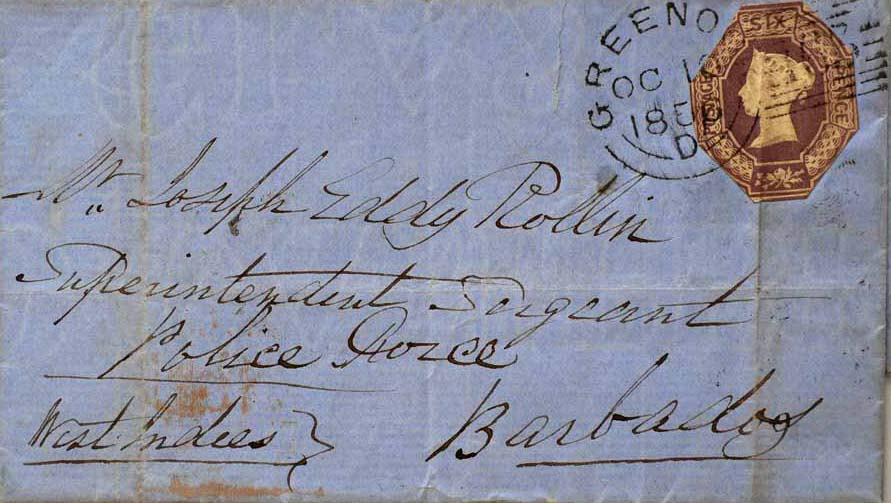
GREENOCK TYPE 1


Characteristics: There are four bars to the left of ‘163’ and three to the right. However, the Proof Book shows four bars at the right and so the top (small) bar must have broken during the first few months. In addition the code is at the bottom of the arc whereas in Type 2 it is at the top.

Known Codes: A*, B*, C*, D & E

Proofed: 2nd January 1856

EKD: 7th January 1856*        LKD: 8th December 1856*

Scarcity: Scarce


IMAGE

wp398fcdb8.png

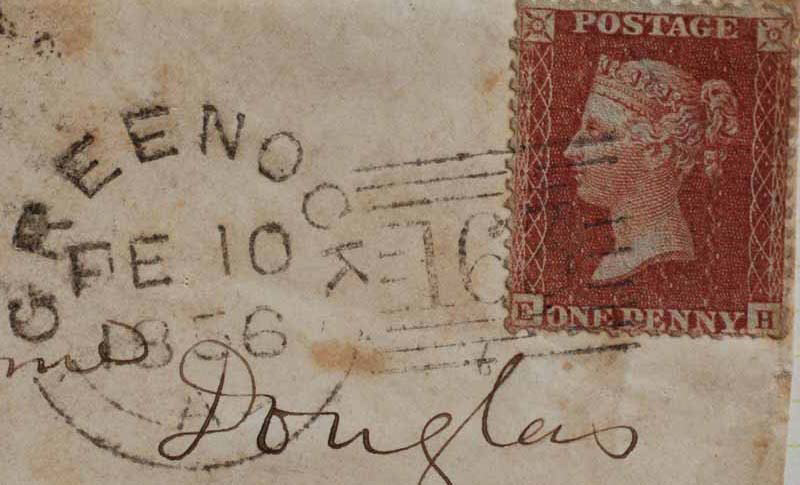
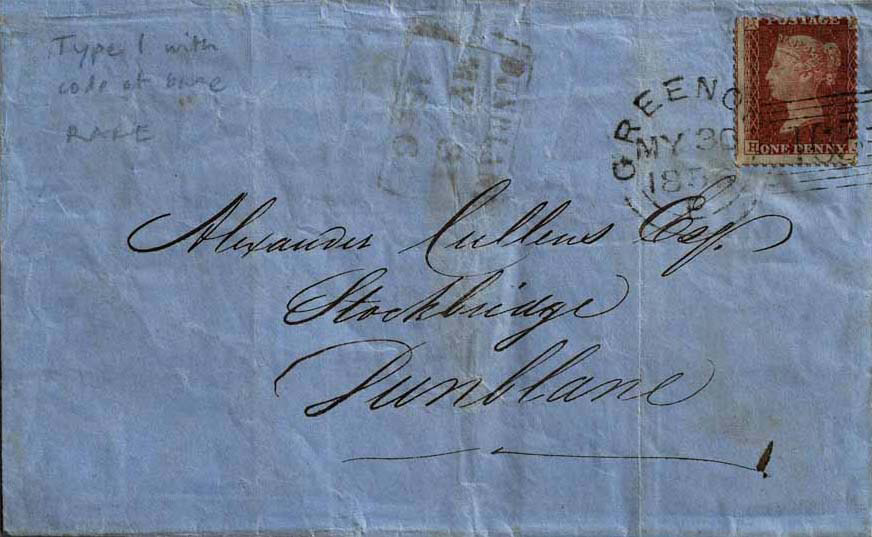
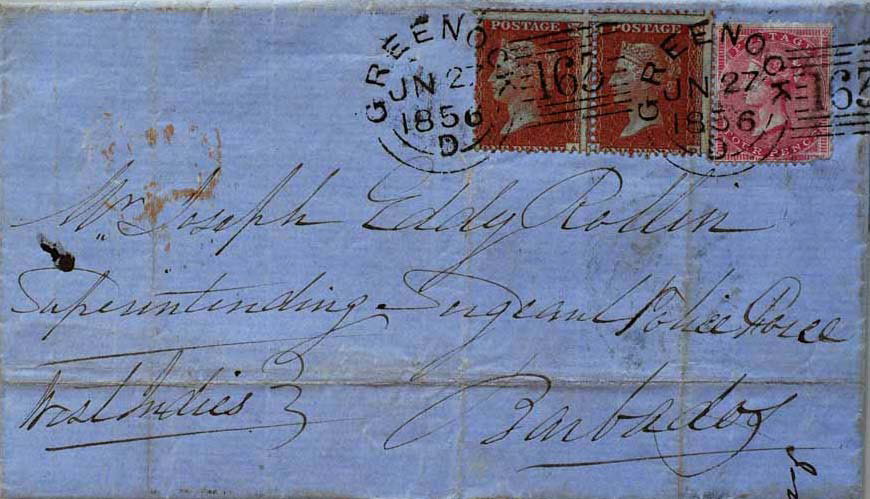
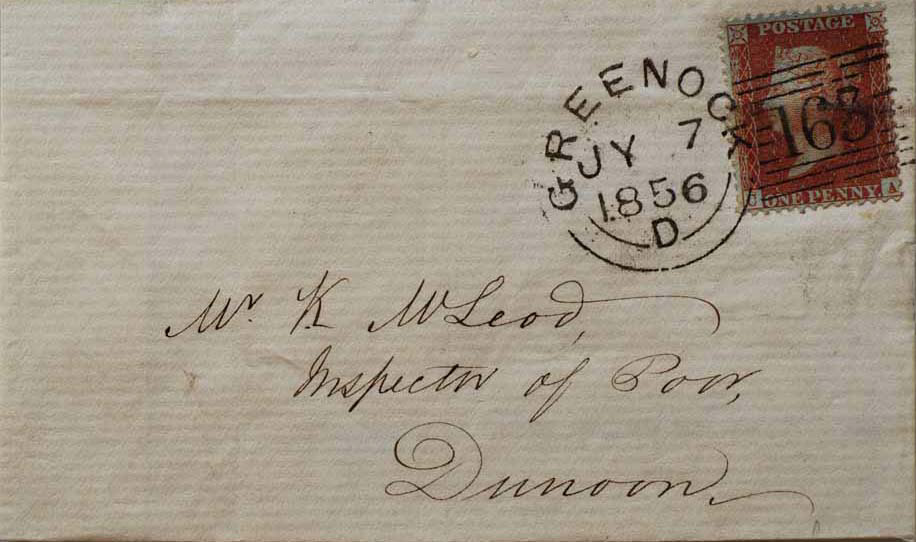
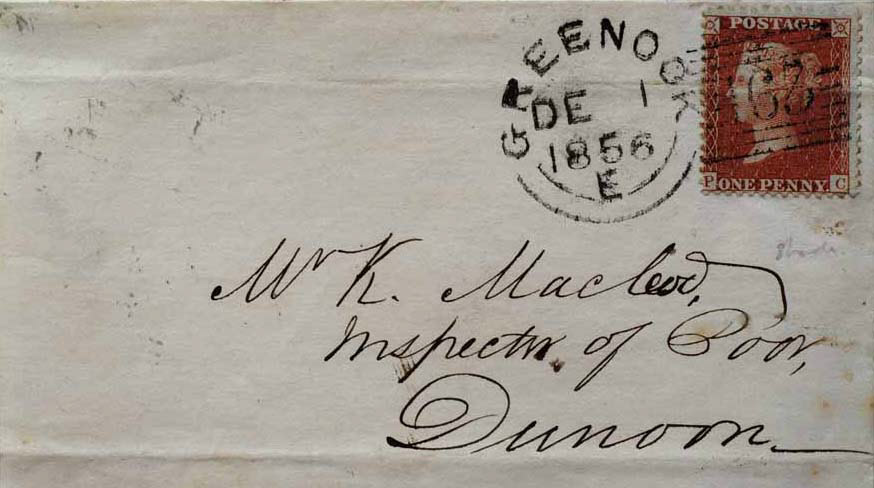
GREENOCK TYPE 2


Characteristics: There are six bars to the left of ‘163’ and five to the right (albeit the third right bar is more of a dot than a bar and in later impressions appears missing). In addition both arcs are damaged on the left below the ‘1’ in the year. The code is at the top of the dater.

Known Codes: A, B, C, D, E, F and blank

Proofed: 21st December 1856

EKD: 13th April 1857*       LKD: 19th November 1859*

Scarcity: Uncommon


IMAGE

wp24b86c1b.png

INVERNESS TYPE 1a


Characteristics: Four short bars each side of ‘183’ Damage occurred to the tops of the first letter ‘E’ and the ‘R’ (the latter existing in the Proof Book impression) during the first few months and this is well represented in the Image below. The earliest date I have seen with the damage is 16th July 1856 and I would very much like to see earlier examples to narrow down the date of damage. Also shown on the Proof and all examples is a break to the right of the second bar.

Known Codes: A, B & C

Proofed: 4th March 1856

EKD: 24th April 1856*        LKD:18th December 1856

It has been alleged that this mark has been seen post 1862 but that does not make sense if we assume that Types 1b and 1c are subsequent recuts.

Scarcity: Rare


IMAGE


wpf7369f28.png

INVERNESS TYPE 1b


Characteristics: This is Type 1a but the short bars on the right were removed on 22nd December 1856 and the letters ‘E’ and ‘R’ were repaired

Known Codes: A, B, C & D

Proofed: 22nd December 1856

EKD: 16th January 1857*     LKD: 23rd December 1858

Scarcity: Relatively Scarce


IMAGE


INVERNESS TYPE 1c


Characteristics: This is a recut of Type 1b but the only noticeable difference is that the Code slot has been cut higher and as such the vertical stroke of the letter ‘R’ is truncated. However identification can also be made via the dates. There was a further entry in the Proof Books of 1st August 1866 but this seems to refer only to the supply of a new Year and Codes. There were two distinct periods of use - see below. However, all examples seen have the year shown in two digits only (but not in the Proof Book).

Known Codes: B, D, E

Proofed: 1st December 1862 and 1st August 1866

First Period EKD: 11th January 1864   LKD: 1st February 1864

Second Period: EKD: 9th August 1866   LKD: 9th August 1866

Scarcity: Both periods are very Scarce particularly the second period where I have only seen one example


IMAGE


wp94290d39.png

INVERNESS TYPE 2


Characteristics: As Type 1a but lettering spaced differently e.g. See the letter ‘I’ which is more horizontal than in Type 1a.. Also if the top bar is extended left it rests on the top of ‘S’ whereas in Type 1a it is in the middle of ‘E’.

Known Codes: ??

Proofed: 27th June 1856

EKD: ??                                  LKD: ??

Scarcity: I have not seen an example; presumably held in reserve


wpb328a1c0.png

KILMARNOCK


Characteristics: Four short bars each side of ‘203’

Known Codes: C, D and 3 on its back

Proofed: 8th January 1856

EKD: 9th January 1856      LKD: 6th August 1857

Scarcity: Rare. This mark seems to have been used between January - May 1856 with an isolated example in October 1856. It was then used in July and August 1857. Examples have been seen in Green  (see Image) and Blue mostly during early dates

In August 1861 a supposed hybrid of the then normal dater combined with this canceller (the lowest left small bar can just be seen)  appeared - note that the third from bottom bar is truncated on the right as with the original mark. I have only seen one copy and this is included in the Image below. However increasingly I am of the view that this is a fabricated example.


IMAGE


wpb0e26e1b.png

LEITH TYPE 1a


Characteristics: As per the image with no day appearing

Known Codes: None

Proofed: June 1855

EKD: 18th July 1855*          LKD: 22nd October 1855

Scarcity: Rare


IMAGE


wp27651bf7.png

.LEITH TYPE 1b


Characteristics: This is Type 1a modified to permit a code to be inserted in the middle of the three bars and also now to include the day.

Known Codes: A*, E, F*, M*, N, X and +

Proofed: 24th October 1855

EKD: 6th November 1855     LKD: 19th November 1856*

Scarcity: Scarce


IMAGE


wpbae91c53.png


wp9e3eafb1.png


LEITH TYPE 2a


Characteristics: Kirkwood supplied the Post Office initially with a stamp that included the word PAID. This was returned that day and a replacement was immediately provided with PAID being removed. (see Characteristics of Type 2b for differences with this Type)

Known Codes: E

Proofed: 3rd May 1856.

EKD: 19th May 1856             LKD: 19th May 1856

Scarcity: Rare; I have only seen one dated example.


IMAGE


LEITH TYPE 2b


Characteristics: It seems likely that Type 2a was not considered satisfactory and a new stamp was provided on 22nd May 1856 (whether this is a recut or a new stamp is not known but  it is noticeable that Type 2a has not been seen post this date). The differences are minor but are:

1. The balls on the figure ‘2’ are much more pronounced on this Type 2b

2. The height of the obliterating part of the stamp is greater than Type 2a - 13 mms against 11.5 mms for Type 2a

Known Codes: A, E, F*, M*, N, X and *

Proofed: 22nd May 1856

EKD: 9th June 1856          LKD: 2nd December 1857*

Scarcity: Relatively Scarce. I have also seen part cancellations on stamp in violet and also in blue.


IMAGE


wp40274398.png

PAISLEY TYPE 1a


Characteristics: Four short bars each side of ‘277’. Note break in top bar which does not show up on the proof and therefore, from examples I have seen, occurred prior to June 1856. I have not seen an example without the break.

Known Codes: A, B, C, D, E, -, Blank and C reversed*

Proofed: 8th April 1856

EKD: 16th April 1856*         LKD: 8th June 1858

Scarcity: Relatively Scarce. Green seen which is Rare


IMAGE


wp63af3abd.png

PAISLEY TYPE 1b


Characteristics: This is Type 1 with the inner circle taken out (break in top bar remains).

Known Codes: D, Reversed C and Blank

Proofed: 9th May 1860

EKD:  24th December 1860    LKD: 10th June 1861

Scarcity: I have seen only three dated examples. Rare


IMAGE


wpffce1896.png

PERTH


Characteristics: Four short bars each side of ‘280’

Known Codes: A*, B, C, D, E, F

Proofed: 4th April 1856. Recut on 19th May 1858 and 29th December 1859 but no noticeable differences

Original

EKD: 22nd May 1856*        LKD: 1st May 1858

First Recut

EKD: 31st May 1858          LKD: 5th November 1859

Second Recut

EKD: 9th Mar 1860             LKD: 14th February 1862*  


Scarcity: I would suggest that examples of the two recuts are relatively Scarce but I need to see more examples in the later years.


IMAGE


wp10b1ed6b.png

STIRLING


Characteristics: Four short bars each side of ‘308’.The bar below ‘3 is always broken. It has been recorded previously that the ‘1’ in the year  is always truncated but this is not the case in some 1856 examples that I have seen (see Image for both types). Further information indicates that this break occurred between March and November 1856

Known Codes: A, B, & C

Proofed: 5th January 1856

EKD: 21st February 1856         LKD: 8th March 1859*

Scarcity: Scarce


IMAGE